1. The “Global English” Trend: New Accent Examples
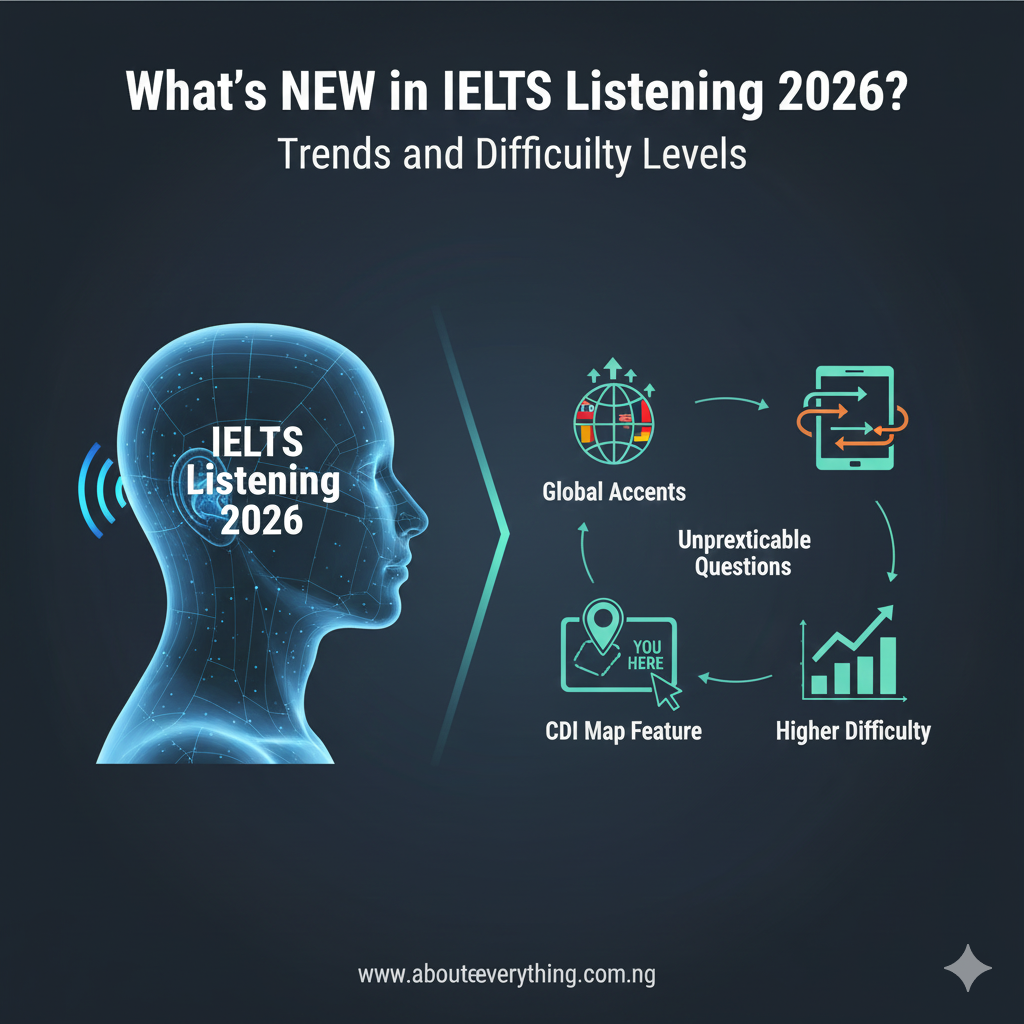
In 2026, the audio isn’t just “Standard British.” You will hear fluent but varied regional accents to reflect modern international environments.
-
Regional British Variants: Instead of just “BBC English” (Received Pronunciation), you might hear Northern English or Scottish speakers.
-
Example: A speaker from Manchester might pronounce “bus” or “love” with a flatter “u” sound, or a Scottish speaker might roll their ‘r’s more prominently.
-
-
Non-Native Fluent Speakers: You may hear a dialogue in Part 3 between a British tutor and a student from Northern Europe (e.g., Germany or Sweden) or East Asia.
-
Tip: The grammar will be perfect, but the intonation and “rhythm” of speech will change.
-
Example: A Swedish speaker might have a “sing-song” pitch that differs from the flat tone of an American speaker.
-
2. Advanced Distractors in Part 3 (Academic Discussions)
Part 3 is where many students lose marks because the “distractors” (wrong options) are mentioned almost as much as the right ones.
-
The “Agreement/Disagreement” Trap:
-
Audio: * Student A: “I think we should focus our research on urban pollution.”
-
Student B: “That’s a popular choice, but wouldn’t rural deforestation be more unique?”
-
Student A: “You’re right, let’s stick with that then.”
-
-
Question: What is the final topic of their research?
-
Analysis: “Urban pollution” is the distractor. “Rural deforestation” is the answer.
-
-
The “Negative Synonym” Trap:
-
Audio: “The professor said the deadline was Monday, but he’s actually pushed it back by 48 hours.”
-
Answer: Wednesday. (The test-taker must calculate the time while listening).
-
3. Part 4: Technical Lecture Complexity
Part 4 in 2026 often covers niche but accessible academic topics. You need to be comfortable with “signposting” words that move the lecture along.
-
Topic Examples:
-
Corporate Crime: Cases like the Ford Pinto scandal or Enron (focusing on “organizational culture”).
-
Environmental Science: The impact of “microplastics” on deep-sea ecosystems.
-
Psychology: “Time Perspectives” (how humans view the past vs. the future).
-
-
Key Vocabulary to Know: Fostering, collaborative, perceived, detrimental, synthesis, primary.
4. Computer-Delivered IELTS (CDI) Interface Changes
The 2026 digital interface has specific features designed to help you, but you must know how to use them.
-
The “You Are Here” Marker: On maps, look for a small pulsing red dot or a bold “X” with the text “Entrance” or “Start.” This is your anchor.
-
Drag-and-Drop: Some matching questions in 2026 use a “Drag-and-Drop” feature rather than typing a letter.
-
Pro-Tip: Practice your mouse accuracy! If you drop the answer in the wrong box, you might get flustered and miss the next audio cue.
-
-
The Highlighter Tool: You can right-click any text in the questions to highlight it. Use this during the “Preparation Time” to mark keywords.
Comparison of Difficulty Levels: 2025 vs. 2026
| Feature | 2025 Standard | 2026 Trend |
| Accents | Mostly UK/AUS | Global (EU, Asian, African English) |
| Map Questions | Fixed starting points | “You Are Here” markers + dynamic layouts |
| Distractors | Direct corrections | Nuanced agreement/disagreement |
| Retakes | Full test retake | One Skill Retake available (CDI only) |