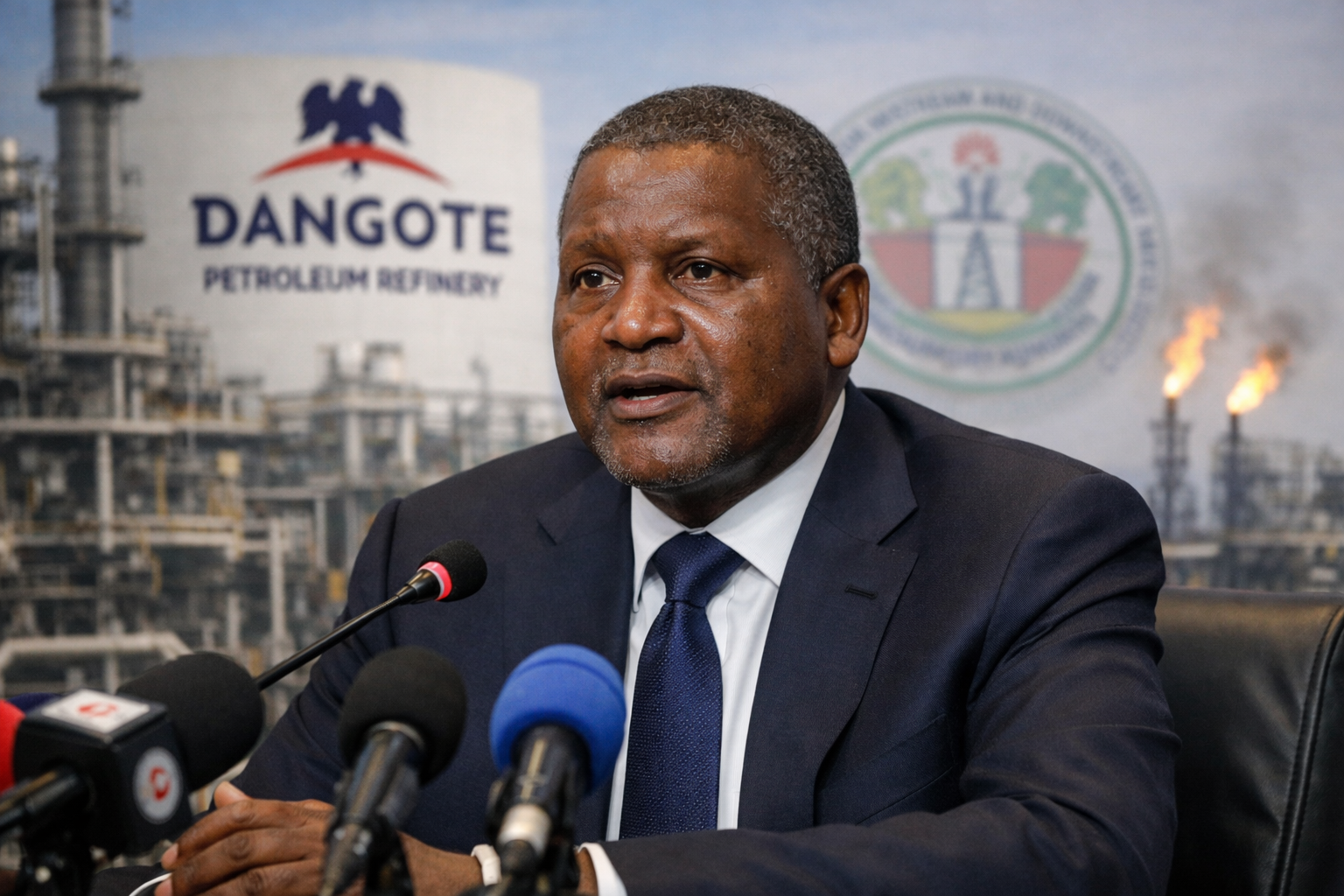
Lagos, Nigeria — Industrial magnate Aliko Dangote, Africa’s richest man, has intensified a public confrontation with Nigeria’s petroleum regulators, demanding a corruption investigation that has already triggered leadership shakeups and political scrutiny across the oil sector.
What Sparked the Dispute?
Dangote, chairman of the Dangote Group, accuses the Nigerian Midstream and Downstream Petroleum Regulatory Authority (NMDPRA) of enabling cheap fuel imports and regulatory practices that undermine domestic refining — particularly his 650,000-barrel-per-day Dangote Refinery in Lagos. According to him, these policies discourage local production, weaken Nigeria’s energy security, and hurt job creation.
He publicly alleged that the NMDPRA Chief, Farouk Ahmed, engaged in questionable conduct, asserting that regulatory decisions have disadvantaged local refiners while favouring importers.
Corruption Allegations & Official Response
In a formal petition to Nigeria’s anti-corruption agencies — including the Code of Conduct Bureau (CCB) and the Independent Corrupt Practices and Other Related Offences Commission (ICPC) — Dangote claimed Ahmed was living beyond his legitimate earnings, citing millions of dollars in educational expenses for his children in Switzerland that allegedly exceed the earnings of a public servant.
Meanwhile, Ahmed has described these allegations as “wild and spurious” while asserting his commitment to cooperate with any legitimate investigation.
Regulatory Shake-Up and Political Fallout
The controversy has already led to significant changes:
- Farouk Ahmed resigned as CEO of NMDPRA following the backlash.
- Gbenga Komolafe, head of the upstream regulator (NUPRC), also stepped down.
- President Bola Tinubu has moved to nominate new leadership for both agencies amid ongoing concerns over governance and confidence in the energy sector.
Lawmakers and Broader Investigation
Nigeria’s House of Representatives has signaled intent to investigate the dispute further, especially claims around fuel import licensing, pricing, and regulatory oversight — warning that unresolved tensions could impact supply stability and investor confidence in the oil industry.
Public Reaction and Civil Society Response
Aside from official channels, civil society groups have taken notice:
- The Council for Culture Change and Ethical Transformation called for an expanded lifestyle audit of petroleum ministry officials following Dangote’s allegations.
- The MIIDEEKOR Environmental Development Initiative praised Dangote for shedding light on alleged systemic issues in the petroleum sector and urged tighter enforcement of environmental protection and regulatory accountability.
These positions show public appetite for greater transparency and oversight in Nigeria’s vital oil industry.
What This Means for Nigeria’s Oil Sector
This dispute marks one of the most high-profile confrontations between private industry and regulatory authorities in recent memory. With Africa’s largest refinery at stake, stakeholders are watching closely:
- Local refining dynamics
- Fuel import policies
- Governance of oil regulatory institutions
- Investor confidence in Nigeria’s energy transition
The outcome could reshape how Nigeria balances domestic capacity with import reliance — a debate with deep economic and political ramifications.
ENROLL FOR YOUR IELTS HERE; EASY STEPS
Nation mourns after beloved South African DJ killed in Johannesburg shooting